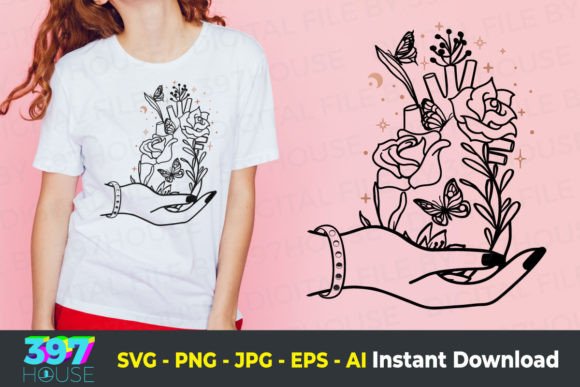
Hand Holding Floral Heart Anatomy Review
When I first opened the folder for Hand Holding Floral Heart Anatomy, I didn't just see a graphic; I saw a story waiting to be stitched. As someone who has spent years turning digital files into tactile, wearable art, my first instinct is always to look past the pretty preview and ask: how will this actually hold up on fabric? This design sits at a fascinating intersection of anatomy, nature, and emotion. It isn't just another floral motif or a standard anatomical heart. The addition of hands cradling the structure adds a layer of human connection that feels incredibly versatile for today's handmade market.
The Mood and Visual Personality
The visual personality of Hand Holding Floral Heart Anatomy is warm yet sophisticated. It evokes a sense of care, fragility, and organic growth. In the world of embroidery, where thread tension and fabric texture can alter a design's mood, this piece strikes a delicate balance. The intricate details of the floral elements suggest a softness that contrasts beautifully with the structural lines of the heart and hands. It feels like a design meant for something intimate—a personalized gift, a keepsake, or a boutique item that tells a deeper story than a simple logo.
For an embroidery designer, the layout is particularly interesting. The composition naturally draws the eye to the center, making it perfect for focal points on garments or home decor. It doesn't scream for attention but rather invites the viewer to lean in and appreciate the craftsmanship. This subtlety is often what separates a mass-produced item from a high-end, handcrafted product.
Real-World Application: A Case Study
To truly understand the potential of this machine embroidery design, let's imagine a real project scenario. I recently had a client request a custom embroidered sweatshirt for a baby shower. She wanted something unique that celebrated motherhood without being overly cliché. Standard options were either too childish or too abstract. That was when I considered Hand Holding Floral Heart Anatomy.
I envisioned the design placed on the back pocket of a heather grey crewneck sweatshirt. The concept was clear: the hands holding the heart represented the mother's love, while the flowers symbolized the new life growing within. When I prepared the file, I immediately thought about how the stitching would interact with the fleece fabric. The design required a medium-density fill stitch to ensure the heart looked substantial, but the floral details needed lighter running stitches to maintain their airy feel.
The result was stunning. The contrast between the smooth satin stitch outlines and the textured fill created a depth that flat printing simply cannot achieve. The customer wasn't just receiving a garment; she received a piece of art that felt personal and precious. This specific combination of anatomy and flora works exceptionally well for baby embroidery projects because it bridges the gap between medical precision and natural beauty.
Performance Across Different Products
This embroidery file is surprisingly adaptable, but its success depends heavily on the substrate you choose. For tote bag designs, the sturdy canvas provides a stable base that allows the detailed hands and floral vines to stand out clearly. However, on softer materials like aprons or kitchen towels, the design shines as a decorative accent near the hem or on the bib area.
If you are an Etsy seller looking to expand your catalog, this design is a strong candidate for holiday gifts. Imagine a set of matching embroidered pillow covers featuring this motif, perhaps in seasonal colors like deep reds and greens for Christmas, or pastels for spring. The versatility extends to commercial embroidery projects as well, such as branding for a wellness studio or a botanical shop. The imagery aligns perfectly with businesses that value health, nature, and human connection.
It also translates well to embroidered patches. If you cut the design out and add a border, it could serve as a high-quality badge for denim jackets or backpacks. The clean lines of the hands and the distinct shape of the heart make it easy to digitize into a patch format without losing definition.
Where Caution Is Required
While the design is robust, there are specific scenarios where Hand Holding Floral Heart Anatomy requires careful handling. Small hoop sizes are the biggest challenge here. Because the design includes fine details in the fingers and flower petals, attempting to fit it into a 4x4 inch hoop might result in lost definition. The tiny gaps between the threads could become cluttered, making the image muddy upon completion.
Fabric choice is equally critical. Stretchy fabrics like jersey or thin synthetics can cause distortion if not stabilized correctly. The density of the heart section pulls the fabric, which might lead to puckering on a loose-knit t-shirt. Similarly, dark fabrics require a higher thread count or a specific underlay technique to ensure the design pops against the background. Without proper stabilizer, the intricate corners of the hands may fray or lose their crisp edges during the washing process.
Curved surfaces, such as baseball caps, present another hurdle. While possible, the curvature can stretch the design slightly, altering the proportions of the heart. For custom apparel on curved items, it is essential to test the digitization on a curved form before committing to a full production run.
Impact on Product Value and Branding
In the current market, consumers are increasingly discerning. They can tell the difference between a screen print and a quality finished product made with machine embroidery. Using a design like Hand Holding Floral Heart Anatomy elevates the perceived value of your work. It signals to the buyer that you have invested time in selecting high-quality assets that convey emotion and detail.
For small business owners, consistency is key. This design offers a professional aesthetic that reinforces brand identity. Whether you are creating small shop products or selling digital embroidery files yourself, having a library of cohesive, well-composed graphics ensures your customers recognize your style. The emotional resonance of the hands and heart creates a stronger bond with the buyer, increasing the likelihood of repeat purchases and positive reviews.
Practical Designer Notes for Success
Before you rush to load this design into your machine, there are several technical steps you must take to ensure a flawless outcome. First, always test the design on scrap fabric that matches the weight and stretch of your final project. This allows you to gauge the stitch density and adjust your tension settings accordingly.
Check your thread color contrast carefully. Lighter threads on dark backgrounds or vice versa can sometimes wash out the fine details of the floral elements. I recommend reviewing the design in black and white mockups to see if the shapes remain distinct without the aid of color. Additionally, inspect the small details closely. The tips of the fingers and the centers of the flowers are areas prone to breaking if the stitch density is too high.
Confirm your hoop size requirements. If the design is large, you may need to split it or use a larger frame. Ensure you are using the correct type of stabilizer—cut-away for permanent wear on garments, or tear-away for temporary support on stable fabrics. Finally, verify the licensing terms. Since these files come in various formats like SVG and EPS, they are likely intended for cutting machines as well, but you must confirm if the license permits commercial use for finished goods you intend to sell.
Hand Holding Floral Heart Anatomy is more than just a graphic; it is a tool for creative entrepreneurs to express complex emotions through thread. By understanding its strengths and respecting its limitations, you can create memorable pieces that resonate deeply with your audience. Whether you are crafting a one-of-a-kind gift or building a line of boutique merchandise, this design offers a solid foundation for excellence.